AFL
AFL Finals System Explained: Percentage, Top Eight and What Your Club Needs
In Australian Rules Football’s (AFL) season, clubs are first ranked by premiership points and then by percentage when the points are equal. A…
The AFL draft is a complex process that is often misunderstood by many fans. It's not just a simple, fixed order of selections; it's a points-based bidding and matching system. To understand how it works, we need to look at the Draft Value Index (DVI), academy and father-son nominations, and live trading of picks.
SESA Sport desk · 28 July 2026 · 652 words
The draft order is still based on ladder position, finals performance, and trades, but the real mechanism is the Draft Value Index (DVI) and its points grid. Pick 1 is worth 3000 points, pick 54 is worth 14 points, and picks after that carry no points under the current system, which only covers the first ~three rounds. The discount for matching bids was cut from 20% to 10% in 2024, making it even more crucial for clubs to manage their DVI points carefully. This points system specifically underpins father-son and academy bidding, not regular, unlinked draftees.
For linked players (father-son, academy), rival clubs can bid with a pick, and the nominating club must match the points value of that pick. Bids from selection 1 to 36 are matched using equivalent DVI points, while bids from selection 37 onwards are matched with the club’s next selection rather than points. A 10% discount is now applied to all bids from selections 1 to 18, followed by an 84-point deduction (10% of selection 18) for all bids from selections 19 to 36, making the bidding process even more nuanced.
The matching club’s next picks are then moved backwards as points are consumed, and if the club cannot or chooses not to match, the player goes to the bidding club. The 2026 reform caps the allowable draft deficit - the number of points a club can effectively borrow from the following year's draft when matching bids - at 412 DVI points, with the requirement to hold a future first-round pick to access it.
The original 2015 introduction of the unified father-son and academy bidding system required clubs to use existing picks to match the bid's points. Father-son players are chosen according to their parents' career, giving clubs that developed them during their youth an opportunity to keep them. Northern club academies such as the Sydney Swans, Greater Western Sydney Giants, Gold Coast Suns, and Brisbane Lions operate their own training programs to produce elite AFL players. Clubs started sending junior players to NGA in hopes they'll produce an eligible player one day.
Unlike Northern academies, NGAs have no ladder restrictions, allowing clubs to match bids on these players at any point during the draft, regardless of their ladder placing.
The latest adjustments to the draft rules change how much a club can throw at a bid and how weaker clubs are protected. From 2026, clubs can only use two picks in the current draft to match bids up to pick 36, with bids at 37 or later matched using the club's next pick. There are now ladder-based discounts and loadings applied to DVI values when matching bids, including a compensation pick in the second round for bottom-five clubs whose top pick is pushed back by a matched bid.
Clubs can trade picks during the draft (live trading), including mid-season picks from 2026, and such trades effectively shuffle points between clubs. Because picks have defined points values, live trades can be analyzed as the exchange of potential for future bidding flexibility. Mid-season pick trading is part of the broader move to make draft capital more fluid and responsive.
Live trading and drafter rules changes have made the AFL draft a highly sophisticated and strategic process. Understanding the numbers - not just the names - is what lets a fan follow the drama without needing commentary. The next time you watch the draft, you'll see clubs weighing whether to match a bid on a father-son or academy player, checking their points balance and deficit limits, and perhaps executing a live trade to secure enough points before the clock runs out. It's a fascinating process that rewards preparation, strategy, and a deep understanding of the DVI system.
AFL
In Australian Rules Football’s (AFL) season, clubs are first ranked by premiership points and then by percentage when the points are equal. A…
AFL
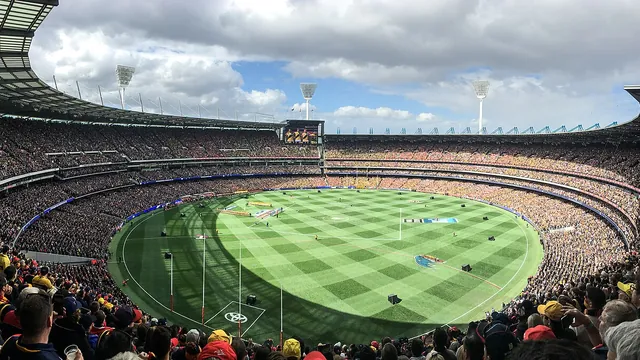
Each AFL game takes place on a ground of a different size. One weekend, North Melbourne may catch themselves having to cover loose ball late in…
AFL
The Australian Football League Women's (AFLW) competition has undergone a significant transformation in recent years, with the 2023–2027…