AFL
AFL Finals System Explained: Percentage, Top Eight and What Your Club Needs
In Australian Rules Football’s (AFL) season, clubs are first ranked by premiership points and then by percentage when the points are equal. A…
Each AFL game takes place on a ground of a different size. One weekend, North Melbourne may catch themselves having to cover loose ball late in Marvel Stadium’s 159.5-metre ache of an oval. The next, they're crashing deeper and tighter into the 117-metre crookedness of Geelong's Kardinia Park. For AFL sides, moving between grounds changes how much their midfield runs, the tightness of their defence, and even changes the motivation to create scores.
SESA Sport desk · 13 August 2026 · 478 words
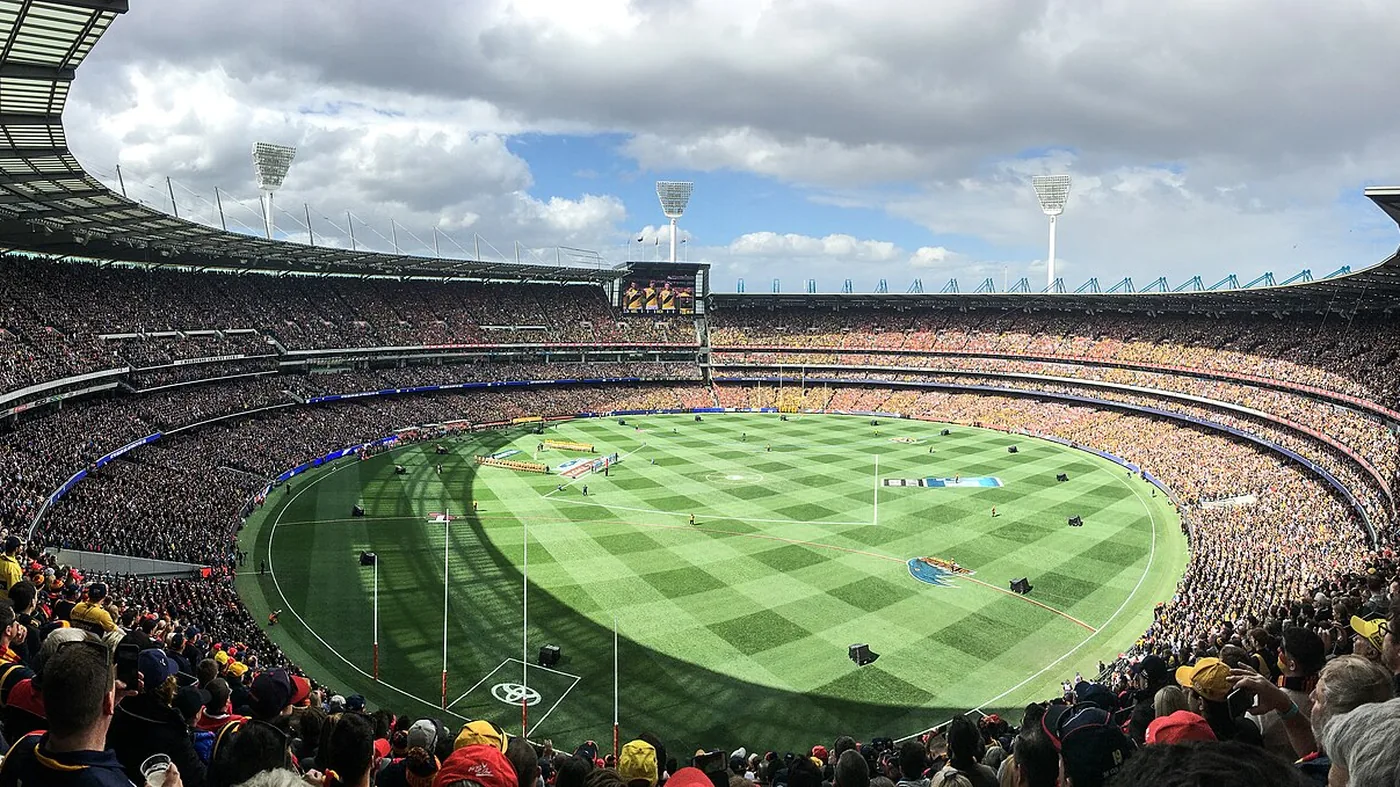
The mismatch is intentional. The AFL has not settled on a standard ground size. According to the AFL's Preferred Facility Guidelines: senior League grounds can stretch anywhere from 135 to 185 metres in length, and 110 to 155 in width. That range means AFL ground area can vary widely, close to a two-fold difference. The AFL guidelines do have a preferred dimension - 165m x 135m - but that is only a preferred size.
Teams must adapt across grounds with a staggering range of dimensions. Marvel Stadium is one of the smaller options, at 159.5 by 128.8 metres. ENGIE Stadium’s dimensions are close but not the same, at 164m x 127.5m. In contrast, the MCG during AFL is narrower and shorter than Marvel, at 160m x 141m.
In this environment, AFL players have learned ground size shapes the game. ABC News reported the original playing rule "merely said that the ground should not be more than 200 yards (182m) wide, with the length to be determined by agreement of each captain." That principle reflects AFL as a code that retains its rules across different dimensions, but does not control them.
When teams play a match, the venue size directly impacts how the game is played. It translates directly to the game: the distance players must cover, and how much ground covering is required.
The AFL's size range affects serious competition. When the dimensions are more intimate, teams might see it as a chance at another score or to deny opponents space. When dimensions extend, play may take longer to unfold, and more running is seen. At one corner, Kardinia Park's 170 metres and 117 metres could restrict the space for open play, and see teams packing more tightly into line and block play.
The debate around venue size is alive in current AFL media. ABC News reported:
How much does ground size actually matter?
It may not be the first thing you think about before a game. But over a finals
series, it could make a real difference to a player's performance.
The ABC framing shows this is an active debate, and venue size is already a consideration for teams. The size of the ground is a factor in determining if a venue feels like the team's home or away advantage. The size of the ground has already been named in several cases. Size determines everything, from the length to cover in contested ball to how much space a team craves.
The incredibly variable dimensions of AFL ground sizes are so much more than a backdrop to the contest. They are an intentional design choice that affects the pressure of defences, length of leads, and very shape and route of scoring moves. The next time you check a fixture list, have a look at the ground dimensions and consider just how much the ground shapes the play.
AFL
In Australian Rules Football’s (AFL) season, clubs are first ranked by premiership points and then by percentage when the points are equal. A…
AFL
The Australian Football League Women's (AFLW) competition has undergone a significant transformation in recent years, with the 2023–2027…

AFL
The Brownlow, the Coleman and the Norm Smith medals are the individual awards that preempt the AFL finals series each year, but each has a…