Archive
Aboriginal People and Australian Football paperback
The paperback edition of , Aboriginal People and Australian Football in the Nineteenth Century: They Did Not Come from Nowhere has just been released…
Archive material. This page was published on sesasport.com before the current editorial desk took the domain on. We keep it online for readers and researchers; it is not the work of the present desk, and personal contact details of the original authors have been removed.
Published as ‘Death, taxes and insurers’, Geelong Advertiser, Saturday 12 January 2008, p. 33.
Winding up my mother-in-law’s small estate after her death has been a salutary experience for my wife, her only surviving daughter and executor, and for me. My mother-in-law was typical of her generation of working-class people in the United Kingdom who grew up experiencing the First and Second World Wars and the Great Depression. I often used to joke with her that she was responsible for the last of these, because she saved every candle end and piece of string and brown paper she had. I used to say to her, ‘You should have been out spending what little money you had on good Keynesian principles to help to keep the shopping tills ringing and hence people employed making goods and providing services.’
But this week we got evidence of another typical feature of the experience of that generation. For many of the poor the thought of a pauper’s funeral, where there was no money to pay for proper funeral expenses, was the greatest fear. The indignity involved was to be avoided at all costs. So Mam would pay a penny a week to an insurance company whose representative would call every so often to collect it. When the policy was taken out in 1937 as Britain came out of the Depression she was a healthy 23-year-old and the sum assured was £17.50. Later the premium rose to two pence per week and in 1975 the payments stopped and the policy was converted into a ‘free policy’. In 2008, 33 years later, we received a cheque from the successor company for £28.15 ($64.00). Her funeral and wake cost roughly one hundred times that amount!
When I was a young research student I investigated the operations of the ‘penny a week funeral funds’ in the early part of the 20th century. I was well aware of the way they preyed on the fears of the poor. Many folks were unable to keep up the payments on the policies when they were unemployed or ill and consequently they lost their contributions. Others might lose the original policy and the company would refuse to pay out. That happened to my family many years ago. For others who kept their side of the bargain to the end, the returns were derisory. In most cases inflation would have eaten away the real value of the outcome when it finally appeared. The people concerned would have been better off putting their money in a bank even at the nugatory rates of interest offered on small savings accounts.
Some of the companies involved were among the biggest names in life assurance in the United Kingdom, if not the world. They managed to con David Lloyd George, the Chancellor of the Exchequer, into major concessions when National Insurance was introduced in Britain in 1911. Now most of them have been incorporated in global enterprises with tentacles which stretch into some of the most impoverished parts of the world. They are an important conduit through which funds are sucked out of these areas to underpin the profits of the metropolitan conglomerates. To some this may simply be a reflection of the way global capitalism works in the twenty-first century, but it just brings home to me in personal terms the result of the research I did 40 years ago. To compound the matter, the company took longer to process the tiny payment than any other organisation we had to deal with after my mother-in-law died.
← Previous Next →Archive
The paperback edition of , Aboriginal People and Australian Football in the Nineteenth Century: They Did Not Come from Nowhere has just been released…
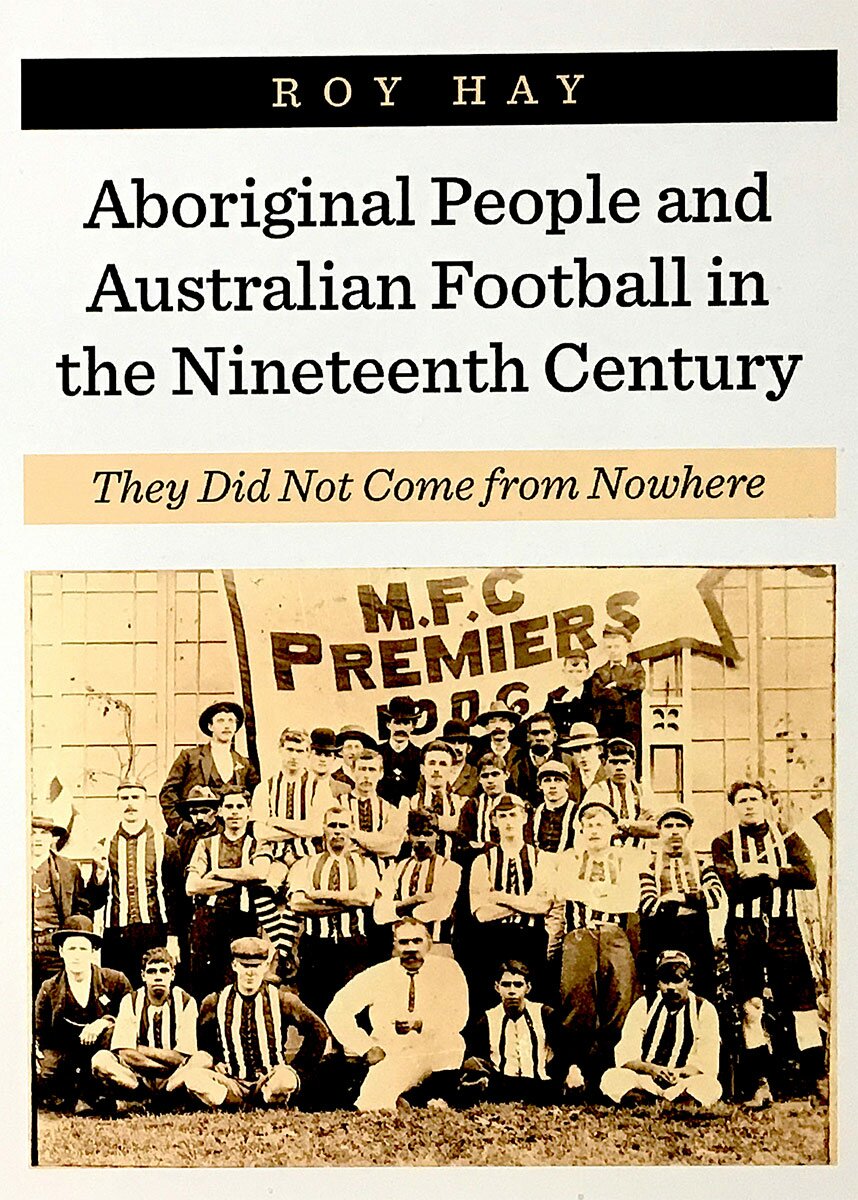
Here are some of the reviews and podcasts about the paperback and hardback versions of Aboriginal People and Australian…

Two five-goal games end in victories for Lara United and Corio in the Morris Finance Cups (Click on photos below to…
Archive
North Geelong Youth team recorded its first win in the Morris Finance Cup at Bell Park Sports Club on Sunday night, when they overcame an almost…