
Football
The Matildas: How Australia Built a Team the Country Watches
Australia’s women’s national football team, the Matildas, are now one of the most accomplished women’s sides in the world, with a stellar record…
Here is a simple question: How exactly are squads built in A-League Men, and how is the league champion decided? Is it all about a ladder, predominant recruitment, and spending practices?
SESA Sport desk · 6 September 2026 · 953 words
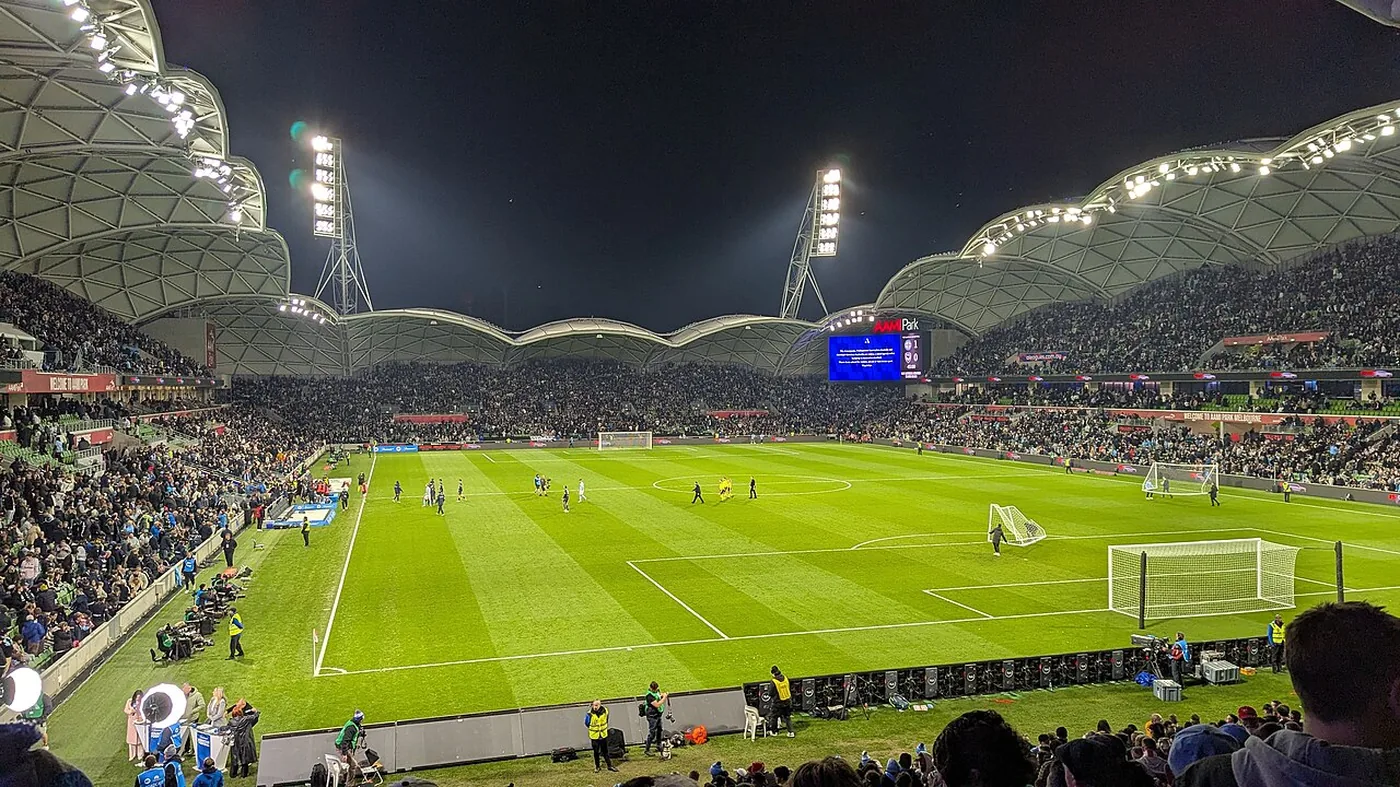
If you're looking at the fixtures, the player transfers, and the ladder table, you would think so, but you'd be missing half the story. A-League Men is best understood as a rule‑bound competition model – salary cap, marquee and scholarship exemptions, closed league, and a six‑team finals series – that directly shapes how squads are built and how a title is won, rather than just as a list of fixtures.
So, what constitutes an A-League Men squad and why is the finals series so crucial for the ultimate title claim? And, how does this translate to the recruitment and salary caps from across the league?
The A-League Men operates in a closed shop. The league is composed of clubs that are awarded licences to participate and no team can be relegated from it, a direct contrast to Europe.
Yes, you read that correctly. There are no promotion or relegation to or from lower divisions. This has a crucial impact on how finishing positions are perceived in Australia's top flight – spending, player movement, and club development are all shaped by this stability.
The league culminates in a Final Series, where the top two end up being exempt from the semi-finals, and the rest play in the opening bracket. That means that qualifying for the playoffs is hugely prioritised in player recruitment.
Rather than the ladder alone, the Premiers and the Champions exist as separate entities, the Premiers being the regular season winner and the Champions being the Grand Final winner.
Constructing an A-League Men squad means working within a salary cap, which has ebbed and flowed over the years, but often been moderated by various exemptions. Is there magic to this cap? It's not.
The 2020-21 A-League Men salary cap was set at AU$2.1 million, with new clubs debuting entitled to a AU$333,000 allowance, bringing their cap to AU$2.433 million, and a salary floor of AU$1.7 million applying to registered players on the A-League roster.
A Guide published in June 2025 states that the A-League - Men salary cap is AU$2.6 million per club for the 2024–25 season
But things didn't stick there. A AU$3.5 million hard cap trial was announced, before the Australian Professional Leagues (APL) announced in April 2025 they will finally implement a trial in this format in 2025–26, with a AU$3 million cap to come for 2026–27.
This is where A-League competition gets interesting.
As the league tries to evolve, A-League clubs can use categories like homegrown players, loyalty players, and salary cap-exempt scholarship players, effectively adding players to their squads while remaining nominally within the salary cap number. It's an evolved model, one where a team can stack quality in their squad from within the A-League fixtures.
And then there are the marquee players, whose salaries – whatever that sum may be – don't count in the club's salary cap.
Marquee players are high-profile signings whose salaries do not count towards the club’s salary cap, allowing teams to attract star talent while maintaining a capped spend on the rest of the squad. They are crucial to squad composition.
The A-League championship finale isn't determined by the ladder as you'll see in Europe. Instead, it's a six team challenge where every club can triumph.
Here's how the last few stages work. After the regular season, the top two teams receive a bye to the semi-finals, while teams finishing third to sixth play elimination finals to determine who joins the top two, and the Grand Final crowns the A-League Men champion.
The top six teams enter the Finals Series with the first two teams being awarded a home game in the semi-finals. The grand final game is played in the home of the highest placed team to progress through the finals.
The six-team finals don't just produce the playoff winners, they also provide an opportunity to host fixtures, which can bring in more revenue and domestic support.
After the regular season, the team that finishes top of the ladder is recognised as Premiers, but the team that wins the Grand Final is recognised as Champions. The two sides may not always collide. Top the ladder but the equivalent to losing a championship is also plausible.
Only the Premiers and Champions split here prove that the ladder alone isn't enough to determine who rises to the top.
Finally, while the cap and marquees may create the conditions for the squad, the final pieces are put into place by the rules stipulated by the league.
For match-day requirements, clubs need to select at least five substitutes on the starting list, one of which must be a nominated goalkeeper.
All of this makes for a tightrope act on the part of the squad builders - getting the right players matching their salary requirements, and also sort the right on-field issue.
With these in mind, it's fair to say fans have come to understand that the season is tasked with balancing attempting to convert fans in, maintaining revenue and sustaining a competitive team - and it's all regulated by the league.
And yet, there's a sense that the A-League is in a state of flux here, leaning towards a strict caps. Will this work, or will fans feel squeezed out of the crowd in the effort to balance the books? This appears to be a move to force parity in time.
Football
Australia’s women’s national football team, the Matildas, are now one of the most accomplished women’s sides in the world, with a stellar record…

Football
Australia's soccer history was shaped by the 2003–2005 transition from the National Soccer League (NSL) to the A‑League. A key factor of this…

Football
On February 12, 2025, Football Australia launched the Australian Championship, a national second tier to sit between the A-League Men and the…