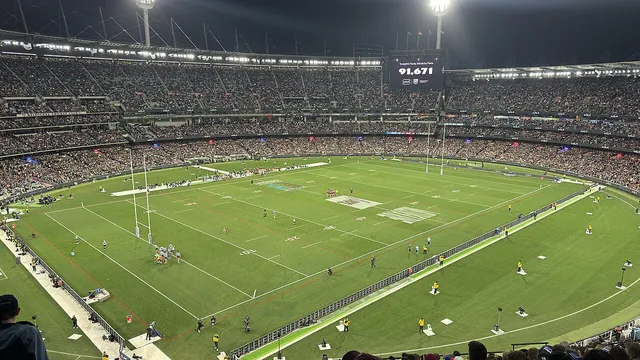
Rugby
State of Origin: The Eligibility Rules That Decide Who Plays
Formerly, a player's eligibility for State of Origin was based on where they first played senior (or registered) rugby league. This "first…
Australia is home to two distinct but related codes of rugby: rugby league and rugby union. While both games share the same basic goal of scoring points by grounding the ball in the opponent's in-goal area, they differ significantly in terms of rules, team sizes, and dynamics on the field. For newcomers to the sport, understanding these differences is key to appreciating and following either code.
SESA Sport desk · 4 July 2026 · 1103 words

When newcomers hear about "rugby" in Australia, they often encounter two distinct competitions and fan bases: the National Rugby League (NRL) and Super Rugby (rugby union). These are not just different names for the same game. Confusion around the distinction between these two codes is common for beginners, but understanding their differences in theory will greatly improve your experience watching either.
The most visible and important difference is the number of players on the field: 15 in rugby union, 13 in rugby league. These different team sizes, along with radically different possession rules, shape the playing styles and rhythms of the games in fundamental ways.
The core difference between rugby league and rugby union lies in how possession is determined after a tackle. In rugby union, a contest known as a ruck or maul takes place every time the ball carrier is tackled. Both teams form an oppositional line over the tackled player, on their hands and feet, and push against each other to gain possession of the loose ball. This means that at the bottom of a breakdown every time a tackle is made, there is a genuine competition between the two sides for possession of the ball.
In rugby league, the dynamic is significantly different. When a player is tackled, a specific player—the one who was tackled—places the ball down on the ground, steps back, and then rolls it back with their foot to a teammate. The referee will order the defence to retreat back 10 metres before the play the ball can take place. The ball is then passed to the teammate who will continue the play. This means that possession isn't a live negotiation, and the attacking team retains possession indefinitely as long as they can make their tackle count each of 6 times.
This is perhaps the single biggest difference between the two codes. In rugby union, the ball is adjusted after each play, and the game is scored in a competition for possession. Therefore, there is no structured system to competition like rugby league. In league, the attacking side is forced to give up the ball if they cannot make a successful tackle on their own. This makes league a much more structured code as the ball is live twice as often.
The possession difference is also reflected in the way the two codes are refereed. A rugby union referee serves as an arbiter of what happens at the bottom of a breakdown, making decisions about which team possesses the ball and who should be penalized if a rule is violated. By contrast, a rugby league referee is more akin to a traffic cop, directing the flow of play and making sure the ball is moved forward a consistent number of times.
Scoring in the two codes also differs. In rugby union, a try is worth 5 points while in rugby league it is worth 4. Conversely, a penalty goal is worth 3 in rugby union and 2 in rugby league, and a drop goal is worth 3 in rugby union and 1 in rugby league. The conversions, which follow the scoring of a try, are 2 points in both codes.
These differences in scoring shape the styles of play in each code. In rugby union, teams are more likely to take shots at goal, particularly from long range, because 3 points is a more attractive score. By contrast, rugby league teams are more inclined to chase tries, in part because they are worth more, but also because league tries are harder to come by given that there is a limited number of tackles available for the attacking side.
The other major differences in the two codes stem from their respective set-piece plays. Rugby union has lineouts, where the ball is thrown into a contest between the two side's line above the head, whereas rugby league has scrums where the ball is hooked back into play. Rugby union restarts play differently from rugby league in various situations.
These differences in set plays shape the flow of matches in each code. Rugby union matches have more stoppages and more contested set piece situations, while rugby league matches tend to be faster-paced and more free-flowing. Rugby league, in fact, sees the ball in play around 50 minutes of an 80‑minute match, compared with around 35 in union, which means more action, but on the other hand, gives the defence more chances to shut down the attacking side.
If a newcomer is watching rugby on TV and wants to figure out which code they're seeing, there are a few basic rules of thumb to keep in mind: Rugby union is played with 15 players per side, while rugby league is played with 13.
Another key is to pay attention to the referee's calls and the general flow of play. If the referee is making a lot of calls about what happens at the bottom of the pile and there are many contested breakdowns, it's likely rugby union. Conversely, if the referee sounds like a traffic cop and the flow of play is more broken up and controlled, with an emphasis on a maximum number of touches per play, it's likely rugby league. Another tip is that if a conversion kick follows a try, it's always worth 2 points.
No matter the code, once you understand these basic possession and flow rules, you'll be able to start making sense of the game, and even more fun, watch the nuances of the play unfold!
Australian fans face a unique challenge because they are exposed to both codes of rugby, and both are played at the elite level in Australia. Without an understanding of the differences in rules, this can lead to confusion and frustration for newcomers. However, once armed with knowledge, these differences can be celebrated and provide a more nuanced appreciation of the games and a richer viewing experience.
So whether you go to a Super Rugby or NRL match, don't come away feeling confused or conflicted. Come away knowing that you have watched two very different games, with very distinct set of rules, that only happen to share the same name. Once you embrace that fact and learn to appreciate the differences, you'll find yourself with twice the amount of rugby to enjoy, twice the amount of rugby to talk about, and twice the amount of captivating athletes to cheer for.
Rugby
Formerly, a player's eligibility for State of Origin was based on where they first played senior (or registered) rugby league. This "first…
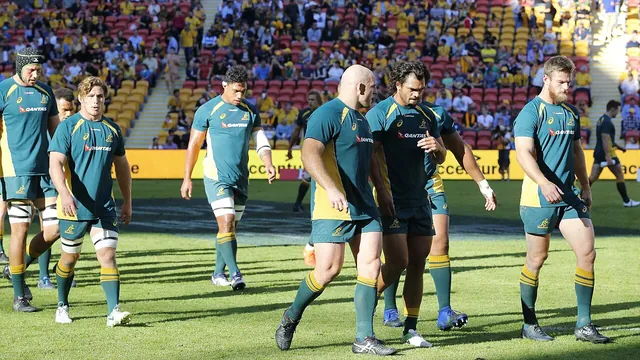
Rugby
Until 2015, overseas-based players could not play for the Wallabies under a blanket ban. That changed in 2015 when the Australian Rugby Union…

Rugby
The NRL salary cap for the 2024 season is $11,650,000 for each club's 30 highest-paid players, with an additional $300,000 for veteran and…