
Rugby
Rugby League vs Rugby Union in Australia: A Beginner's Guide
Australia is home to two distinct but related codes of rugby: rugby league and rugby union. While both games share the same basic goal of…
Until 2015, overseas-based players could not play for the Wallabies under a blanket ban. That changed in 2015 when the Australian Rugby Union (ARU)[1] — now Rugby Australia — introduced a selection policy that allowed experienced, long-serving players based overseas to suit up for the national team.
SESA Sport desk · 26 June 2026 · 763 words
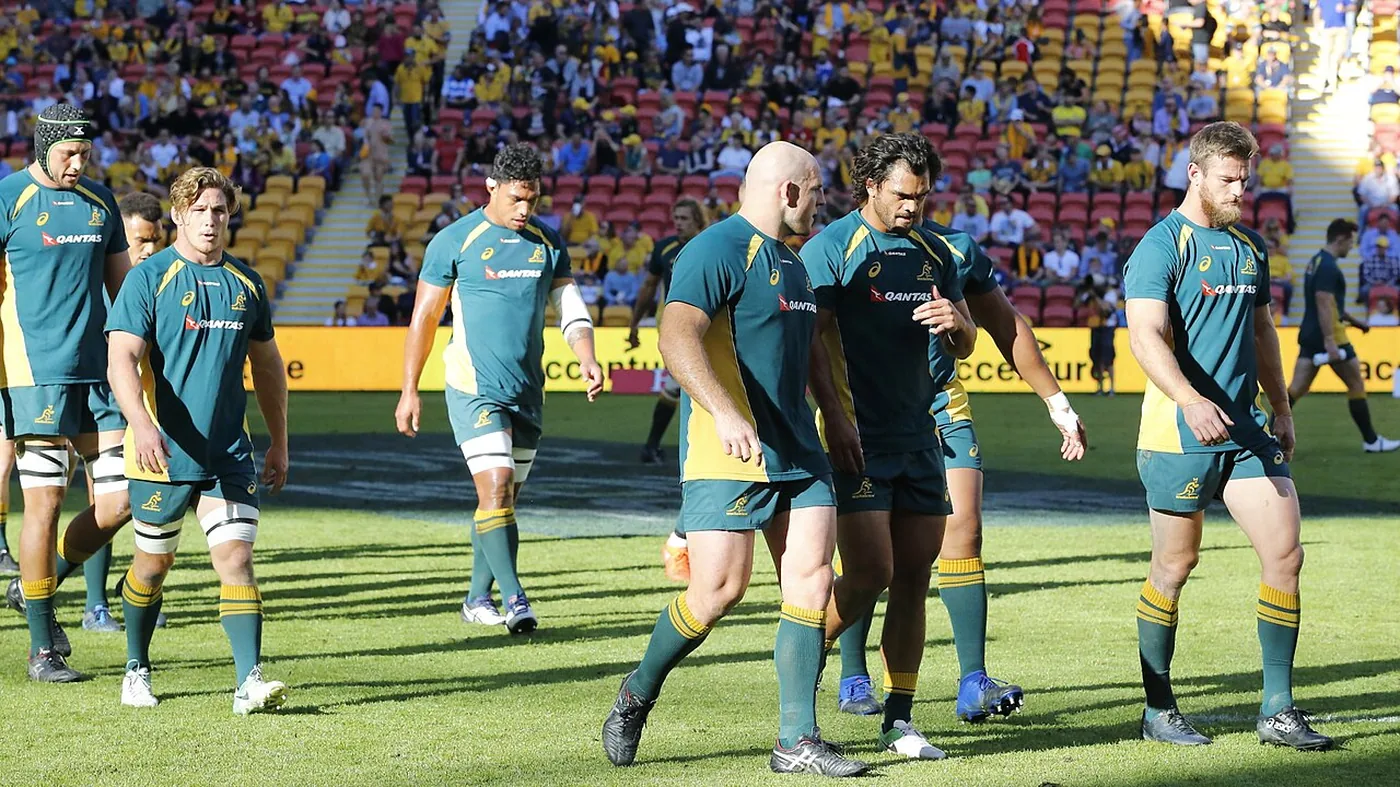
This "Giteau's Law"[2] was named for Matt Giteau, a standout midfielder who was based in France and sought to represent his country at the 2015 Rugby World Cup. The law famously allowed Giteau to play in the tournament, alongside other long-serving stars, by setting clear criteria: to be selected from overseas, a player would need to have earned at least 60 caps and completed a minimum of seven seasons in Super Rugby in Australia.
That rule stood from 2015 to the end of the 2020 Southern Hemisphere season, with notable players such as Drew Mitchell and Sekope Kepu among those associated with the era under the 60-cap rule.
On 23 September 2020, Rugby Australia amended the policy. This marked a significant change to "Giteau's Law" during a time of Covid-19 disruption, with the eligibility criteria expanded so that up to two players who did not meet the original thresholds would be eligible for selection for the Wallabies.[3]
The change was framed as a way to ensure the best possible team could be selected at a time of global disruption, with the player eligibility rules to be reviewed at the end of the 2021 Super Rugby season.[4] This marked a shift, with wider discretion granted to coaches to select more than two overseas players, but questions remained about how sustainable this would be as Covid measures eased.
That factor took specific form when from February 2022 a new policy took effect. It was revealed that the Wallabies head coach could only pick three overseas-based players.[5] This move was done despite what had previously been described as "Giteau's Law" and the ability of the Wallabies to pick up to two players without qualifying under the original thresholds,[6] with a limited number of overseas-based players coming in under the new rules. How the law got its name suggests that it was influenced by the individual, it was named “Giteau’s law” because it was widely seen as a way to make France‑based Matt Giteau eligible for the 2015 Rugby World Cup; national coach Michael Cheika worked with the ARU to allow players with 60 caps or more to represent the Wallabies despite not playing Super Rugby in Australia. Since that tournament, with over four years of constant development, Rugby Australia (RA) changed the law.
As of 2022, Rugby Australia set a limit of three overseas players that can earn a Wallabies selection, irrespective of the amount of international Tests or domestic Super Rugby under their belts.[7] RA also said in 2022 that a player could also be selected, even if they don't meet the 30-cap rule, as long as they are contracted to an Australian Super Rugby team the following season after being picked.[8]
In 2020 Rugby Australia amended "Giteau's Law" to widen eligibility, allowing up to two overseas-based players who did not meet the original thresholds to be selected for the Wallabies.[9]
But it became even more flexible in 2025 of all years. Earlier this year, Rugby Australia confirmed that the much-vaunted "Giteau's Law" has been scrapped. This means that overseas-based Australian-eligible players would now be eligible to appear for the Wallabies again. Regardless of Test caps or Super Rugby seasons in Australia, RA are no longer limiting how many players can be called up for national selection. If a player is eligible for the Wallabies, per international rules, they can now be chosen by the coach and his selection panel.10
The change has been a drastic one, moving away from the 60-cap mark since 2015, and then the 30-cap limit in 2022. Now, all will be in the coach's hands as they find their footing in the role.
Why has the rule continued to get more flexible and less restrictive, despite its global reach to keep the best Australian players in the domestic competition? RA likely wanted to entice more players to represent the Wallabies, already in a battle with the New Zealand All Blacks and the Springboks of South Africa, to help them win the Bledisloe and end their long title drought. As one analysis put it, it.11
For the luminaries who have played in the Australian Test pickup side in the last two decades, it has meant that they received opportunities to pull on the gold jersey. From Matt Giteau to Samu Kerevi, to Kurtley Beale and even to Bernard Foley, there have been some stellar players over the years to play in the domestic jersey for the Wallabies alongside their overseas successes. It's that attraction to players and a need for better international results that likely shaped these recent changes and reforms.
Rugby
Australia is home to two distinct but related codes of rugby: rugby league and rugby union. While both games share the same basic goal of…

Rugby
Formerly, a player's eligibility for State of Origin was based on where they first played senior (or registered) rugby league. This "first…

Rugby
The NRL salary cap for the 2024 season is $11,650,000 for each club's 30 highest-paid players, with an additional $300,000 for veteran and…