
Rugby
Rugby League vs Rugby Union in Australia: A Beginner's Guide
Australia is home to two distinct but related codes of rugby: rugby league and rugby union. While both games share the same basic goal of…
Formerly, a player's eligibility for State of Origin was based on where they first played senior (or registered) rugby league. This "first senior game" line of thinking foresaw the problem of players moving between states but did not completely alleviate it. Consequently, fans and administrators frequently found themselves navigating a "minefield" of eligibility conundrums, with some prominent players' convictions subject to continuous debate.
SESA Sport desk · 30 June 2026 · 864 words
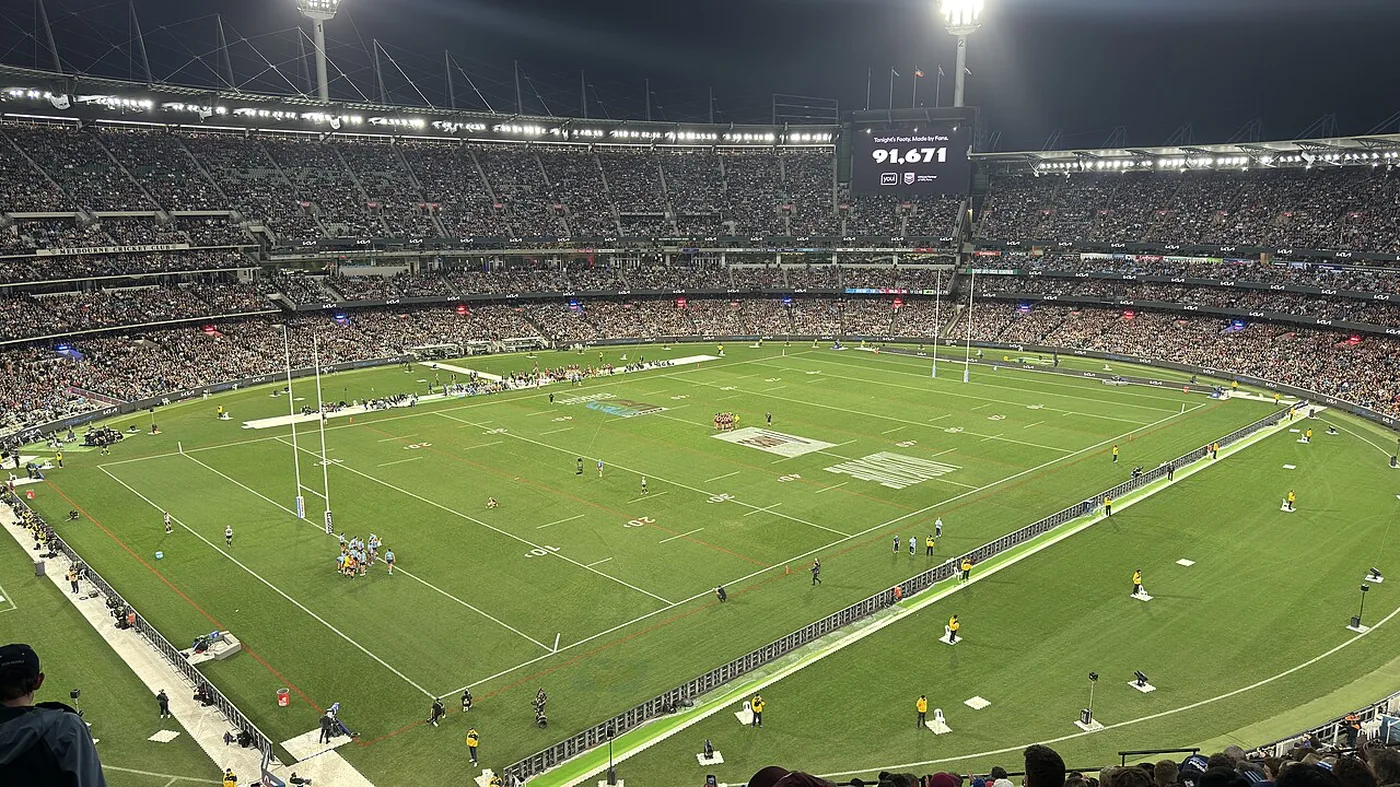
On 18 December 2012, Australia's Rugby League Commission (ARLC), operating in collaboration with the governing institutions for New South Wales (NSWRL) and Queensland (QRL), enacted sweeping changes to their eligibility structure. Starting from the 2013 matches onwards, the new conventions tied State of Origin eligibility to Australian national representation, prohibiting players connected with tier-one nations (New Zealand and England) from taking part in the series.
The modifications centered on integrating Australian national team eligibility and State of Origin eligibility, providing clearer pathways. To qualify, players now had to be eligible and elect to play for Australia, while being ineligible if they had represented another tier-one nation at senior level. These reforms were meant, according to the ABC, to "clarify and tighten" eligibility, ensuring that players had a substantial, formative connection with the state they represented.
The 2012 NRL eligibility regulations determined a player's State of Origin team through a six-question rubric:
A player's eligibility is determined by a majority of the responses above, with no one criterion given priority. If a player has already played for State of Origin at the junior or senior level — even for City or Country — those eligibility answers cannot be contested.
The guidelines additionally provide a father-son allowance should there be no guideline answer, implying if a player's father represented NSW or QLD in Origin, the child also becomes eligible.
However, the definition that states the player has to be living before turning thirteen in the state they are representing is the most discussed.
Beside the general guidelines, there are edge cases: players who reside in NSW regionally but play in QLD ranks, or vice-versa. To address these, the eligibility procedure — and not a strict set of eligibility rules — comes into play. The NRL, or in some instances the NRL CEO, reviews these cases and makes a ruling, indicating a tier of grey area that remains in the eligibility landscape, despite the 2012 reforms.
According to the ABC, the six-problem test works because the vast majority of cases are automated, providing a clear answer, but a minority still exist that require NRL discretion. Even in the era of strict eligibility rules, the likelihood of an arbitration decision clouded the eligibility question.
Following the 2012 modifications, a certified player had to be born, raised in the state and hold residency, or have an Origin-adherent father. Beyond that, they had to have chosen to represent Australia in tests and not appeared for a different tier-one team (like the Kiwis or the Kangaroos), potentially transforming an Origin-eligible player into a non-eligible one.
However, according to the National Rugby League's (NRL) updated eligibility chart and multiple news agencies, a 2026 rule change overruled that clause. Players who played for other nations and in other nations were now eligible to represent NSW or QLD if they had fulfilled other criteria. This started a debate about players who had represented New Zealand or England at international level.
Yet, compared to the birth/residency/Origin-played-father criteria, international representation appeared less decisive than the main split between the state-based eligibility requirements.
The typical Origin eligibility argument — particularly from fans — frequently crops up on issues of birthplace vs. growth. Many pretend a player can only be representing QLD if they were born there, or vice versa. As above-discussed, a player's eligibility is partly determined by not just their birthplace, but also which state they played junior and worked their way through school.
Additionally, living in a state before age 13 is a formal requirement. However, the rules cover more, including the father-son exemption and international representation.
Based on post-2026 changes, international jerseys no longer make a player ineligible. So, arguments accepting this fact are valid: a Kiwi-capped player could potentially represent NSW or QLD.
Ultimately, how fans select arguments does not matter. Once a player has played at Origin level or played for the national team, their status is cemented and cannot be disputed.
But still, there is this ambiguity.
State of Origin's eligibility framework, while detailed, relied on development and national allegiance. However, despite the elaborate nature, the selection decision depends on how the NRL understands a specific player's path. As long as the bar is above an age limit of thirteen, adhering to residence, international test, or paternal status remains important.
In conclusion, while the eligibility debate sees a touch of uncertainty, the strict rules see a significant balance. Fans need to consider a player's full identity and make decisions based on something more than their birth or off-field status.
Rugby
Australia is home to two distinct but related codes of rugby: rugby league and rugby union. While both games share the same basic goal of…
Rugby
Until 2015, overseas-based players could not play for the Wallabies under a blanket ban. That changed in 2015 when the Australian Rugby Union…

Rugby
The NRL salary cap for the 2024 season is $11,650,000 for each club's 30 highest-paid players, with an additional $300,000 for veteran and…