Sport & Society
What Community Sport Costs in Australia, and Who Pays For It
The true cost of a junior community sport season far exceeds the registration and equipment fees Australian families see upfront. So who bears…
Firms like Foxtel and Nine hold many women's sports broadcast rights, but the government's "anti-siphoning" scheme determines which games must get free-to-air slots. Anti-siphoning rules, along with recent broadcast contracts, have the power to bring more women's sports—like the Matildas' matches in the FIFA Women's World Cup—to free-to-air. But the contracts that Australia's sports leagues have signed with broadcasting channels are what make the deals work.
SESA Sport desk · 17 May 2026 · 921 words
Australia enacted the anti-siphoning scheme in 1995. It blocks subscription TV and streaming services from buying the rights to events until a free-to-air TV network has had first dibs. The Australian Government updated the list of events covered by the anti-siphoning scheme to include "future matches of the FIFA Women’s World Cup involving the Matildas" on September 14, 2023. This gives free-to-air networks first rights to those Matildas Women's World Cup matches.
The Minister for Communications added future FIFA Women's World Cup matches to the list.
When the Government published its reforms to the anti-siphoning scheme in December 2024, the rules gained digital extension. Now, even subscription streaming services can't buy rights to an event until free-to-air TV networks have had the chance. This is a big win for Australian sports fans, as it means more major women's sports events are likely to be on free-to-air TV.
While the latest changes were a win for sports fans, they still left some questions. For example, many wondered: what about women’s football on a regular basis? Regular Matildas football matches sat with the 10 ViacomCBS deal, not the World Cup rights.
Optus gained the rights to show the 2023 Women's World Cup but sold them to free TV, Seven, for some games. This included various Matildas matches and other key games.
But as of 17 December 2024, the anti-siphoning list now includes future World Cup matches involving the Matildas. As of 2024, that's a big draw for women's football fans. However, this doesn't include all the regular matches.
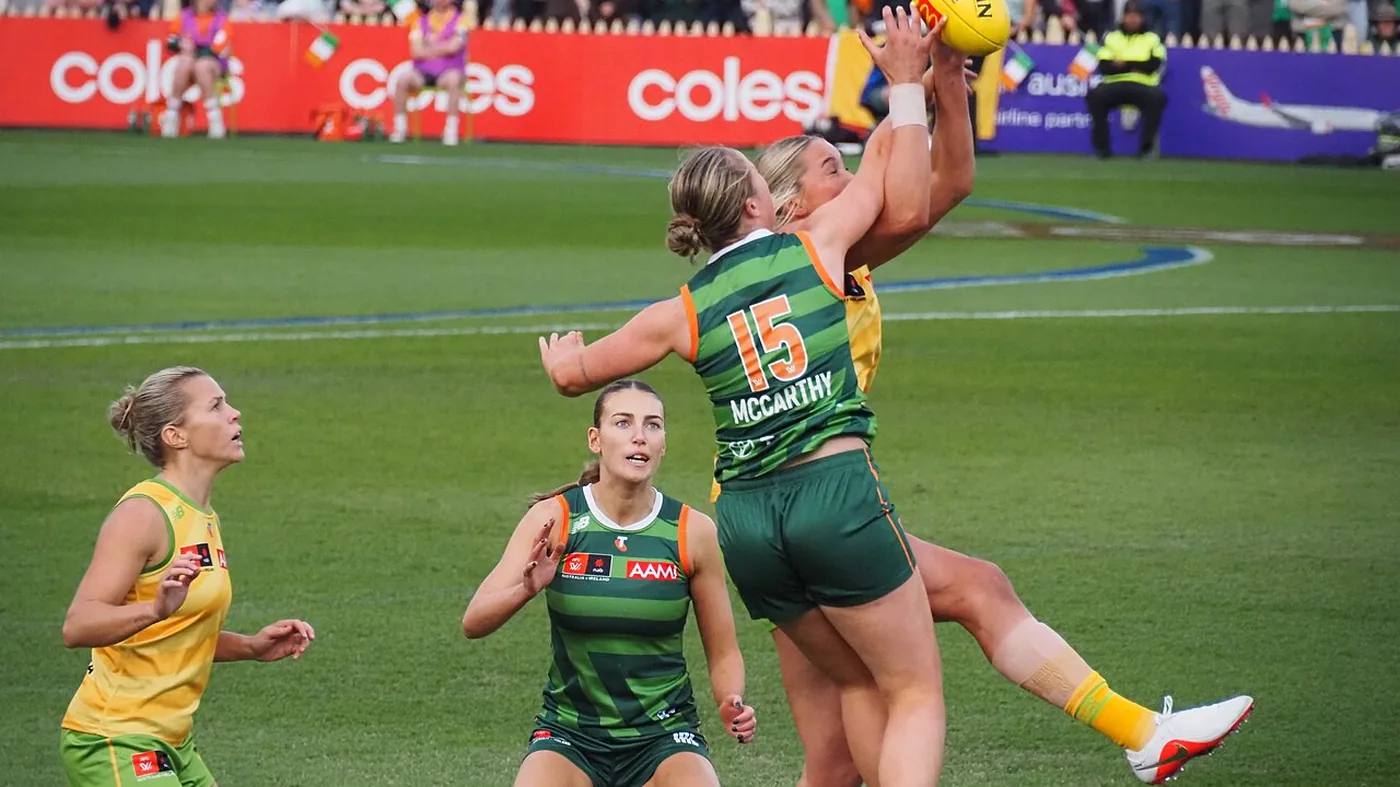
AFL signed a massive deal, worth $4.5 billion, in January 2026. This deal last until 2031 and promises at least 30 Australian Football League Women's (AFLW) home-and-away matches per season. Seven will broadcast these live and totally free from 2025. And all the games will be available on Kayo and Foxtel.
This is a win for Australian sports fans, as it means more AFLW matches will be available on free-to-air TV. But it's not the first time the league has guaranteed free-to-air AFLW matches. In December 2020, Seven signed a two-year extension covering the 2023 and 2024 NAB AFLW seasons. So, the idea of ensuring women's sport is accessible to the public has been in the league's mind for years.
The women’s Big Bash League (WBBL) is back in 2024, with a new structure and broadcast deal. It's the first year of the seven-year AUD 1.512 billion agreement between Cricket Australia, Seven, and Foxtel. Now, Foxtel’s dedicated cricket channel and Kayo have broadcast rights for all 43 WBBL matches, while Seven will broadcast a minimum of 23.
But there's a catch: the deal will only guarantee those 23 matches on free-to-air TV for the 2024-25 and 2025-26 seasons. After that, the number of free-to-air matches per year could change. This means that while the matches are available to watch, Australian women's cricket fans might have to pay for some of the games.
[Aren't the names of the sport broadcast partners something you'd certainly be able to check? I have rather got to wonder why this is marked TO VERIFY. ]
NRLW is in for a big year too. As part of the record-breaking AUD $5.3 billion deal, Nine Entertainment will show NRL and NRLW games on free-to-air and streaming, now that the reforms have changed anti-siphoning rules.2529
Nine's free-to-air component is valued at $145 million per year in cash. But the exact number of NRLW matches on free-to-air TV is still unclear. Broadcasters frequently negotiate specific matches or rounds into contracts, but match schedules for NRLW 2028–2034 haven't been released.
[a variation on the ending below that tries to hit on why this is still a work in progress] So while the anti-siphoning scheme and recent contracts have already brought more women's sports to free-to-air, it's not a perfect solution. The scheme only covers events specified on the list, and contracts only guarantee a minimum number of matches. The Matildas, AFLW, WBBL, and NRLW have benefited, but many other women's sports remain behind a paywall. And even for those who have made it to free-to-air, there are still gaps in coverage. It's a start, but there's still a lot of work to do to make women's sports as accessible as men's.
While anti-siphoning protects some events, it's not a perfect solution. Matildas' fans can watch some World Cup matches on free-to-air, but not regular matches. AFLW fans can watch at least 30 home-and-away matches per season, but not all of them. WBBL fans can watch 23 matches per season, but not all of them. And NRLW fans? The exact number of free-to-air matches is still unclear.
A way of going out with the conclusion So while anti-siphoning and recent contracts have brought more women's sports to free-to-air, it's not a perfect solution. The scheme only covers events specified on the list, and contracts only guarantee a minimum number of matches. It's a start, but there's still a lot of work to do to make women's sports as accessible as men's.
Or, I can change the conclusion to be more upbeat, split out the conclusion from the remaining caveats, or go for other options, per your preference.
Sport & Society
The true cost of a junior community sport season far exceeds the registration and equipment fees Australian families see upfront. So who bears…
Sport & Society
National sports bodies have revised Australian sport’s concussion protocols, with players younger than 19 or competing outside top-tier leagues…
Sport & Society
Indigenous Australians have a proud sporting history stretching back to the mid-19th century, but the growth of recognition rounds in major…