
Football
How the A-League Men Actually Works: Cap, Marquees and the Finals Series
Here is a simple question: How exactly are squads built in A-League Men, and how is the league champion decided? Is it all about a ladder…
On February 12, 2025, Football Australia launched the Australian Championship, a national second tier to sit between the A-League Men and the National Premier Leagues (NPL). Scheduled to start on October 10, 2025, the inaugural season will feature 16 teams divided into four groups, competing in a Champions League-style competition format.
SESA Sport desk · 17 August 2026 · 1261 words
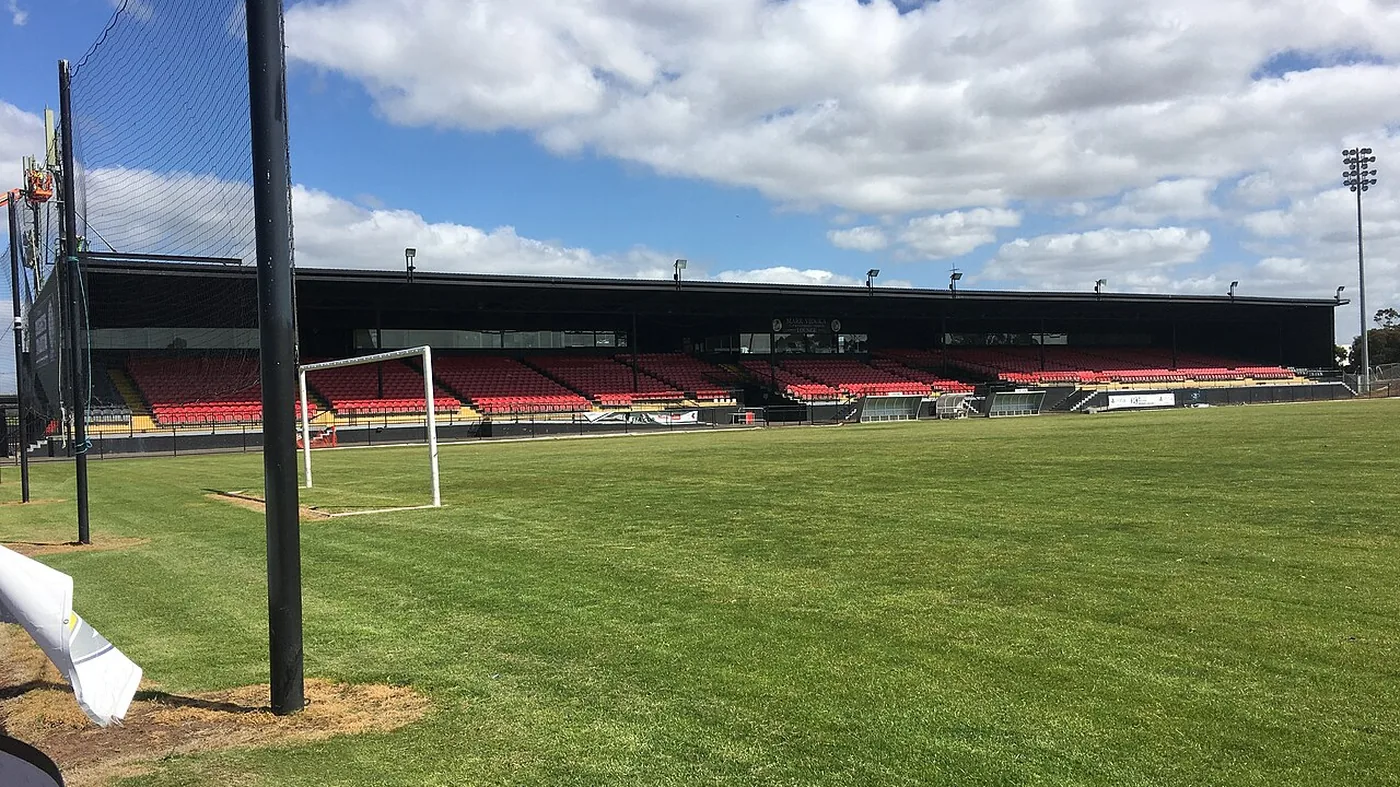
The Australian Championship marks a major milestone in Australian football: the formal creation of a second tier for the first time since the launch of the A-League in 2005. But while the national competition provides a major step up for many clubs, in its current format the path to the top flight remains conditional and contingent on future policy decisions by Football Australia.
The new competition is positioned as the Australian soccer league system's level two division, formally placed between the A-League Men at the pinnacle and the state-based NPL leagues a rung below.
But how did Australia reach this point, and why did Football Australia opt for this particular format? The road to a national second tier dates back to initial concept design and public consultation in 2023, with the goal of creating a "meaningful pathway" between established state competitions and the professional A-League Men.
The original National Second Tier (NST) concept envisioned a full home-and-away league with each club playing 24 to 36 matches over a season. Football Australia's FAQs for the NST, published in 2023, allowed for the possibility of a phased group-based competition model that would utilise the NPL foundations. The Australian Championship format ultimately introduced in 2025 reflects this group-based option rather than the full league envisioned in the original design.
Rather than the traditional home-and-away competition planned in the initial NST concept, the Australian Championship has been explicitly described as "Champions League-style."
It will kick off on October 10, 2025, with a six-week group stage. The 16 clubs will be divided into four groups, with each team playing the three others in their group on a home-and-away basis. The top two clubs from each group will then qualify for a knockout phase, culminating in a grand final on December 6-7.
The group stage spans around six weeks, from mid-October to November. The knockout series will then occur over several weeks, with the grand final held over a two-day window to minimise travel and hosting disruption for the contesting clubs. This format means the Australian Championship does not run simultaneously with the A-League Men season.
Football Australia's FAQs note that the design of the Australian Championship allows for the competition’s length and model to adapt and evolve in future years. The 12-week 2025 season with six weeks of round-robin group matches and six weeks of knockouts represents the initial implementation of the group-based model direction envisioned in the original concept.
The 16-team line-up includes eight foundation clubs that were announced by Football Australia in 2023, and selected in part on their recognition and contribution to the football heritage in Australia. These eight are:
The other eight places are filled each year by clubs selected from the National Premier Leagues in each state. Football Australia has set out a process for member federations to select and recommend clubs to fill the invitational slots, drawn from the state-based NPL competitions.
The participation of the NPL representatives means that the foundation clubs will face different competitors in each annual competition, providing the opportunity for multiple clubs across the country to experience national second-tier football.
Football Australia's FAQs explicitly state that promotion and relegation between the new National Second Tier and the A-League Men will be "considered once mature," subject to financial sustainability and more comprehensive league reforms.
In practice, this means that at present, there is no direct promotion or relegation of clubs between the Australian Championship and the A-League Men. The newly established competition has been explicitly framed as complementary to the A-League Men, with the FA's stated intent being to strengthen the top flight, rather than providing an immediate pathway for teams to reach it.
[FACT: The independence agreement between Football Australia, which owns the A-League, and the A-League clubs grants full autonomy to both in directing the commercial operations of the A-League. Promotion and relegation would require changes to the A-League's independent governance model. SOURCE: SMH – “Revealed: The plan to embrace promotion and relegation in the A-League”, https://www.smh.com.au/sport/soccer/the-plan-to-embrace-promotion-and-relegation-in-the-a-league-20230516-p5d8qj.html, 16 May 2023;]
Even the broader timeline for the exploration of the possibility of promotion and relegation remains conditional and subject to significant qualification. The 2019 FFA statement said the agreement entitles existing and incoming A-League clubs to participate in the competition until 2034. The document also includes a provision for the introduction of promotion and relegation during that period.
That said, the 2019 document contains a provision for the introduction of promotion and relegation during the 2034 period, with the New Leagues Working Group and the Second Division Working Group tasked with continuing to consider the future pathways and link between the top two tiers of Australian club football reform:
The long-term landscape may offer a path for Australian Championship clubs to reach the A-League, but the reality remains that any changes to the current status quo is at least a decade away.
With the launch of the Australian Championship, the structure of the Australian soccer league system now features a clearly defined national second tier for the first time following the creation of the A-League in 2005.
The addition of the new national competition has elevated the National Premier Leagues, which were previously the highest level of senior competition in each state, to become the Australian Championship's feeder level - the third tier in the full pyramid.
From the perspective of grassroots and state-based clubs, the Australian Championship has symbolically reinforced the historic contribution of the National Soccer League (NSL) clubs to the Australian game, and embodies Football Australia's goal of creating a "connected, meaningful pathway" between heritage clubs and the professional tier.
But it is important to note what has not changed: progression of teams into the A-League from the Australian Championship is still explicitly dependent on the evaluation of competition sustainability and structural reform by Football Australia, and not via a direct pathway or via immediate promotion.
While the Australian Championship represents a significant change in the structure of Australian football, the question of promotion and relegation to the A-League remains a policy question and a conditional enterprise.
Football Australia's own messaging, local and national media outlets and many supporters and stakeholders all perceive the Australian Championship filling in the missing link in the league structure.
However, given the conditional nature, institutional controls, and the underlying intent of stabilizing the A-League, the immediate path to "promotion" doesn't exist, and getting to "real" promotion depends on a number of factors:
With this outlook, the long-term road to "legitimate" promotion remains dependent upon both a healthy Australian Championship and a number of institutional adjustments, likely to play out over the next five to 10 years.
Football
Here is a simple question: How exactly are squads built in A-League Men, and how is the league champion decided? Is it all about a ladder…

Football
Australia’s women’s national football team, the Matildas, are now one of the most accomplished women’s sides in the world, with a stellar record…

Football
Australia's soccer history was shaped by the 2003–2005 transition from the National Soccer League (NSL) to the A‑League. A key factor of this…