
Football
How the A-League Men Actually Works: Cap, Marquees and the Finals Series
Here is a simple question: How exactly are squads built in A-League Men, and how is the league champion decided? Is it all about a ladder…
Australia's soccer history was shaped by the 2003–2005 transition from the National Soccer League (NSL) to the A‑League. A key factor of this shift was the Report of the Independent Soccer Review Committee into the Structure, Governance and Management of Soccer in Australia, better known as the Crawford Review. Released in April 2003, David Crawford's review contained 53 recommendations that had ramifications across the sport in Australia. Not only was Soccer Australia instructed to rebuild its governance structures with the inclusion of a new, independent board, but the NSL would also soon be scrapped at the end of the 2003–04 season.
SESA Sport desk · 9 August 2026 · 1031 words
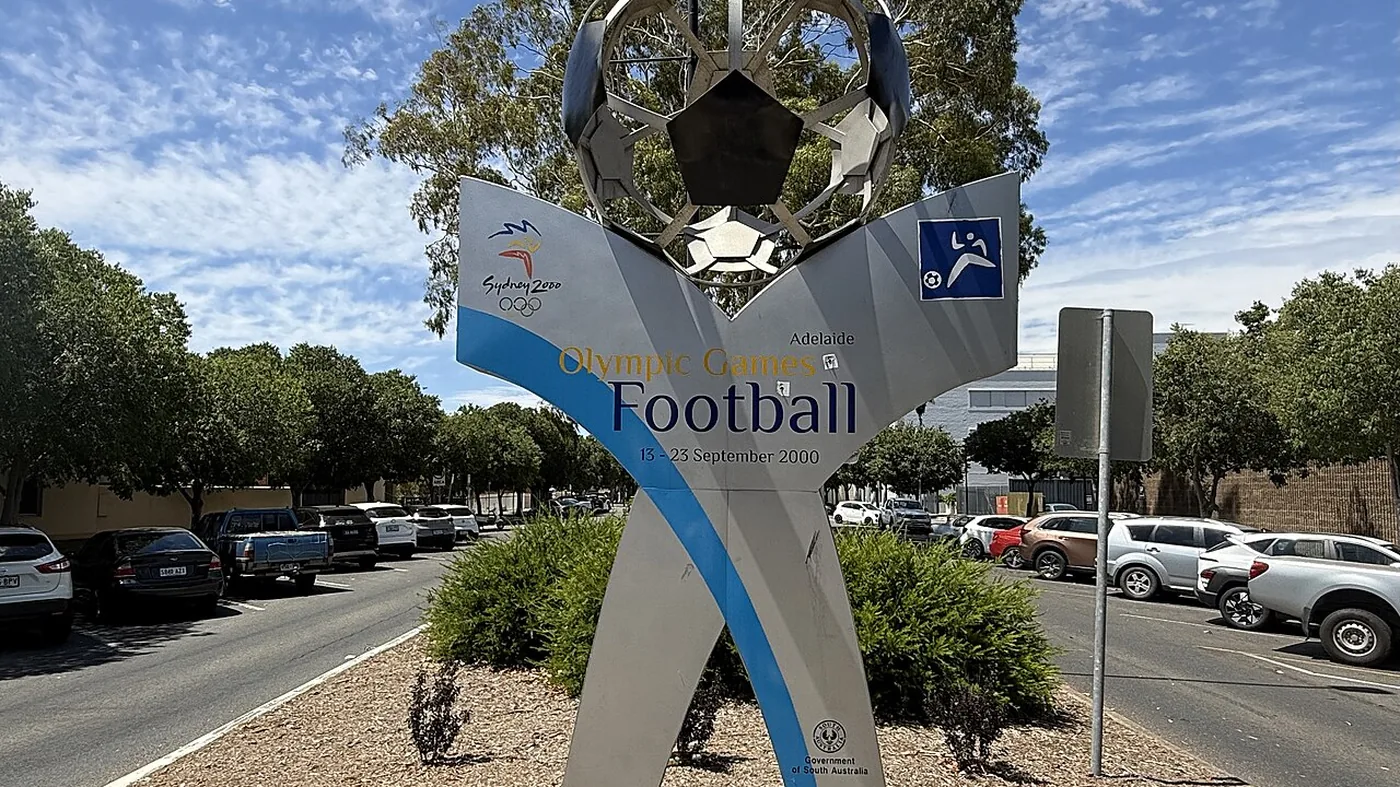
Seeing the launch of the A-League in August 2005, many of the long established NSL side were not part of the new franchise. But where did things go wrong, and what exactly prompted the government to remove Soccer Australia's hierarchy and completely overhaul the competition?
The Crawford Review marked a milestone in Australian soccer's transformation. David Crawford's federal government-commissioned report was critical of Soccer Australia's administration, highlighting the need for a comprehensive overhaul of the sport's governance.
Containing 53 recommendations, the Crawford Review sought to separate governance from day-to-day management, change membership and voting structures at the national and state level, and restructure the relationship between Soccer Australia and the NSL. The report suggested that the NSL should become a separate entity operating under a licence from Soccer Australia, with a board comprised of independent directors elected by participating NSL clubs and separate funding from the national body.
These recommendations were a catalyst for change in Australia's soccer landscape, leading to a total restructuring of the sport's administration.
The NSL, founded in 1977, faced numerous challenges that ultimately led to its demise. Contemporary analyses of the league point to a range of structural issues that contributed to its failure: poor crowd numbers and revenue, loss of top Australian players to overseas leagues, and poor administration by Soccer Australia. Furthermore, there were controversies surrounding attempts to "abandon the ethnic flavour" of the league, limited media support, lack of rigorous financial vetting of clubs, and high travel costs due to the league's trans-Australasian nature.
The NSL's struggles were exacerbated by a situation that saw many of the clubs aligned to particular ethnic communities leading to tensions throughout the league. This led to mismanagement within Soccer Australia and the broader collapse of the governing body.
The Crawford Review's shake-up led to the liquidation of Soccer Australia in 2004. In its place, the Australian Soccer Association (later renamed Football Federation Australia) was established, with businessman Frank Lowy as its leader. This marked a significant change in the administration of soccer in Australia.
Following the winding up of the NSL at the end of the 2003–04 season, the stage was set for the birth of the A-League.
The A‑League was launched in August 2005, with eight new or reconstituted clubs operating in a closed league with no promotion or relegation. This contrasted sharply with the NSL, which had a more open structure. The A‑League adopted a centralised club licence structure, with key principles including A‑League owners contributing to strategic decision‑making, the development of annual operating plans for the league, and strict financial controls such as salary cap and marquee player affordability tests.
These measures were intended to ensure that owners bore the financial risk of the league, and to create a more sustainable and professional soccer landscape in Australia. The A-League's franchise‑based model was a deliberate departure from the community‑based, often ethnically‑anchored clubs of the NSL era.
The transition from the NSL to the A-League saw the loss of many community‑based clubs that were closely aligned to particular ethnic communities. These clubs were often the lifeblood of local soccer culture, and their absence in the A-League was felt by many in the soccer community.
The A-League's launch in 2005 marked a significant shift away from this ethnically‑aligned, community‑focused approach. The new league was designed to create a more "professional" and "mainstream" image, but in doing so, it left behind a rich cultural legacy that had defined Australian soccer for decades.
They became a more professional and mainstream league at the cost of proud club culture in Australia.
The transition from the NSL to the A-League was a seismic shift in Australian soccer, driven by a combination of financial instability, governance issues, and a desire to create a more professional and mainstream league. However, the process of this transition, particularly the exclusion of many NSL clubs from the new A-League, is shrouded in some ambiguity.
While it is clear that the A-League adopted a franchised, city‑based model that consciously broke from the community‑focused and often ethnically‑anchored clubs of the NSL era, the precise reasons for the exclusion of many NSL clubs as entities have yet to be fully clarified from primary sources. It is apparent that the A‑League licences were created in a way that, in practice, did not carry over the majority of the old NSL clubs, but whether this was an explicit legal and policy decision to formally prohibit existing NSL entities from holding licences remains to be verified from the available record.
It is also not entirely clear whether the eight founding A‑League clubs in 2004, under license, were meant to be reconstituted versions of specific NSL clubs, rather than new franchises. Evidence suggests that the most successful and financially viable NSL clubs were those that carried over in a corporate sense. So the may help clarify the relationship between the last season of the NSL and the launch of the A-League.
It is also worth considering whether the cultural and ethnic dimensions contributed in any way to the selection criteria of the new clubs, or simply played out in the realities of how the new licensing process worked in comparison to old model. The Crawford Report and official accounts do not have clear details to verify exactly what drove this. Among the many TO CONFIRM: athletes affected who became part of the new league FFA footage, soundbites, or player profiles could be updated to fill that gap.
Despite the uncertainties, it is evident that the transition from the NSL to the A-League fundamentally reshaped the landscape of Australian soccer, bringing in a new era of centralised control, financial discipline, and a franchise‑based model that has defined the league ever since.
Looking at the new generations and soccer culture today, the questions remain what about the recent changes, and how does the A-League reflect on the legacy it inherited?
Football
Here is a simple question: How exactly are squads built in A-League Men, and how is the league champion decided? Is it all about a ladder…

Football
Australia’s women’s national football team, the Matildas, are now one of the most accomplished women’s sides in the world, with a stellar record…

Football
On February 12, 2025, Football Australia launched the Australian Championship, a national second tier to sit between the A-League Men and the…