More Sports
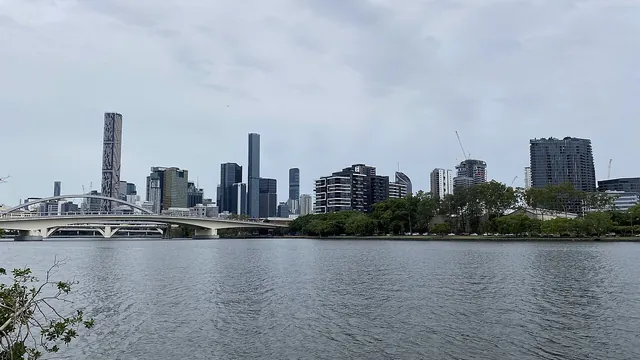
Brisbane 2032: How an Australian Olympic Program Is Built
The Queensland Government has committed A$4.7 billion to implement the 2032 Delivery Plan for the Brisbane 2032 Olympic and Paralympic Games…
The 128-player singles draw at the Australian Open is an intricate puzzle, with 104 spots awarded to players ranked high enough to qualify six weeks out, eight wildcards doled out by tournament organisers, and 16 spots reserved for the winners of a pre-tournament qualifying competition.
SESA Sport desk · 14 June 2026 · 832 words

From those 128 players, 32 are seeded to limit early Round clashes. The top 104 ranked players receive direct entry to the main draw, while the bottom three rounds of the 128-player men’s and women’s qualifying give 16 players entry into the main draw. Eight players then get into the main draw via wildcard.
The 2024 season started with the men's and women's singles draws for the Australian Open, each consisting of 128 players. Most qualifiers failed to make it into the draw, with only 16 spots for those who managed to reach the final qualifying round. Eight of the players in the men's and women's singles draws secured their spot through wildcard invitations.
Out of these 128 players, 32 are designated as seeds, which are determined by the player's ranking as of the first Monday in January.
The remaining 96 players in the draw are apportioned to the four quarters, with 24 in each. This is done using an open system, which ensures impartiality, with the 32 seeds distributed across the four quarters.
The grand slam men and women's singles events are formed of a 128 player draw. 32 of the 128 are seeded based on a ranking list dated about seven days before the start of the event. Seeded players are not allowed to play each other in the first, second or third rounds.
The Australian Open uses a 32-player seed system, with the top two seeds placed in opposite draws, so they cannot meet until the final. The next two seeds are placed in the draws opposite the two lowest seeds, so the top four seeds cannot meet until the semi-finals. Seeds five to eight are then placed in the draws so they cannot meet until the quarter-finals, with the remaining seeds allocated to keep them from meeting each other in the first three rounds.
In Grand Slam tournaments, including the Australian Open, the 32 seeded players are placed in four sections, with the top seed in position 1 and the second seed in position 128. The third and fourth seeds are placed in separate sections, one at the top of a separate quarter and the other in another quarter. Seeds 5-8 are then placed in separate sections, 9-12, 13-16, and 17-32 in the remaining sections.
The Australian Open offers eight wildcard spots in the main draw for the singles events. These wildcards are allocated solely by the discretion of the tournament organisers, and criteria are not disclosed in the verified sources.
Typically, wildcards are awarded to local players, players returning from injury or break and those who would not otherwise qualify via ranking. Overseas players may receive reciprocal wildcards based on agreements between Tennis Australia and other national associations.
The qualifying tournament for the Australian Open begins one week before the main event, with a 128-player draw. Players compete in a 3-round knockout format, and the 16 winners gain entry to the main draw. The qualifiers have a separate seeding, with seeds determined by the latest available rankings. This means higher-ranked qualifiers are kept apart in earlier rounds, enhancing the fairness of the process.
The Australian Open singles draw ceremony is a public event that puts the seeds in the draw by following the ITF Rulebook. Seeds are allocated to specific positions to keep top players apart until later in the tournament.
The remaining 96 players are then allocated to the draw using an approved software system, which ensures impartiality.
The order in which the remaining players are placed in the draw is determined by random. Draw tickets are prepared one for each unseeded player, left in a bag containing each of these tickets.
When the Australian Open singles draw is announced, 32 of the 128 players are seeded, with the top four each in different sections, and the rest spread to keep them against each other until later rounds.
Wildcards are scattered across the draw, while qualifiers do have an equal chance of landing in any position. Players from the bottom of the draw can rise to the top by winning multiple rounds against higher-ranked opponents.
So when you see Novak Djokovic in the top half and Daniil Medvedev in the bottom, you know they won't be meeting in the first week. But with wildcards and qualifiers filling the gaps, upsets can happen early, especially in the lower sections where the top seeds are thinner.
This is why the draw is so important—the top players are naturally clustered, which can make top-heavy sections feel inevitable winners. But that's also where the volatility lay, with the wildest potential flashpoints arriving when lower-ranked players have a chance to explode onto the scene.
More Sports
The Queensland Government has committed A$4.7 billion to implement the 2032 Delivery Plan for the Brisbane 2032 Olympic and Paralympic Games…
More Sports
At the Australian Olympic nomination trials, athletes are eliminated if they merely place top two - they must simultaneously outswim their…

More Sports
The 2023 Supercars Championship marked a major change with the introduction of Gen3 regulations, a sweeping set of technical updates aimed at…