More Sports
Brisbane 2032: How an Australian Olympic Program Is Built
The Queensland Government has committed A$4.7 billion to implement the 2032 Delivery Plan for the Brisbane 2032 Olympic and Paralympic Games…
The 2023 Supercars Championship marked a major change with the introduction of Gen3 regulations, a sweeping set of technical updates aimed at closer, cheaper, and more road-relevant racing. Under Gen3, Australia's top touring car series shifted to cars with coupé body shapes, a 5.7-litre Chevrolet LTR V8, and an aero package that cuts generated downforce by 67%, creating some of the closest Supercars competition in the championship’s history.
SESA Sport desk · 6 June 2026 · 633 words
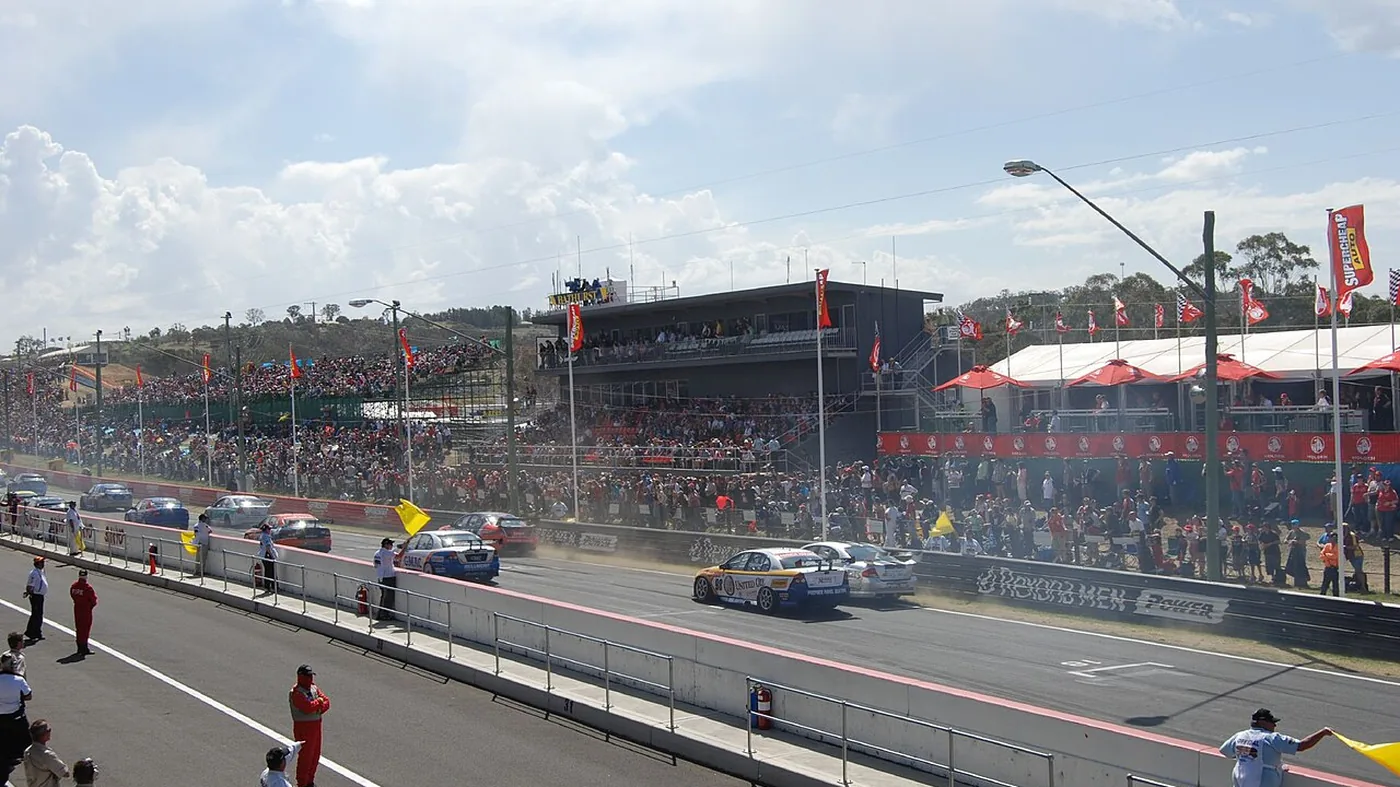
The Gen3 regulations, first announced in 2020[3], brought wide-ranging technical changes to reduce costs, amplify road relevance, and create a more level playing field. A refined chassis better suited to coupe bodies saw the roll cage lowered by 100 mm, whilst control components—such as pedal and brake kits and wheels—were mandated to balance parity and costs. [5]14
Under the hood, Gen3's implementation of fuel-injected V8s formed a closer link to road-going parts. The Chevy Camaro’s 5.7-litre LTR V8 and Ford Mustang's 5.4-litre Coyote V8 are now nearly identical to their production counterparts, bolstering the on-track relevancy. [5]
Aerodynamic changes were most transformative for on-track racing. Generating 67% less downforce, the cars became more challenging to pilot, with reduced dirty air also opening up more overtaking opportunities. [5]14
Weight changes brought the minimum from 1400 to 1335 kg, lowered to 1340 kg mid-season. A switch to an E75 fuel format was touted for environmental benefits. [5][6]15
With established control components and parity in place, Supercars argues that this has produced some of the closest competition in its history.[6]14 The logical progression for Gen3 sees the same cars step down to the Super2 series from 2028. 14
Before the reset, each race weekend awards points to drivers completing at least 75% of the race. A race must reach at least 50% of its planned distance for the result and points to stand. [1]10
The standard race points scale looks like this: 1st = 150, 2nd = 138, 3rd = 129, then down to 21 points for a 28th place finish. Drivers finishing in the top 15 may also gain an additional 5 points for posting the quickest lap. 1013
A new points system, inspired by NASCAR, introduces at the Gold Coast[8] reshapes how the title is pursued. At the Gold Coast reset, only the qualified drivers have their points elevated to 3,000 - with Sprint and Enduro winners adding 25 bonus points each at this crucial juncture. [8]12
In Finals, the art of dropping the fewest points takes on importance. With an extra 5 points for fastest laps and the reset now playing a starring role in title ambition, a ten-point swing in Finals can reshape top-5 ambitions entirely. 1013
While Gen3 has narrowed the technical disparities between the fleet, endurance events still stand out as a springboard - and stress-tester - for championship pursuits. Details remain to be unveiled on this year's Bathurst edition points and co-driver split, but it stands as part of the thrilling Enduro Cup fight.
As a signing-off to the season and the Finals push, Bathurst and its epic 1000 km battle sees co-drivers, paddock legends like trading seats with no-name enduro troops in cars that have equal home-field advantage in the heart of the ranges.
Fans desiring full Supercar immersion must understand Gen3's technical tweaks, familiarise with the Sprint and Enduro Cup, know that additional 5 points for fastest laps, and hence why the Finals reset is pivotal. With the technical balance tilted to parity and endurance events anchoring the end-of-year push, a grasp of these moving parts is crucial for a fully immersed Supercar die-hard.
In a nation with a love of motorsport, Supercars, now in its fourth year under Gen3, is more than just cars with numbers on them — it's a national pride in touring car racing. Cars now armed with Gen3 tech, the introduction of Toyota in 2026 and further cements it as a category wholly its own.
More Sports
The Queensland Government has committed A$4.7 billion to implement the 2032 Delivery Plan for the Brisbane 2032 Olympic and Paralympic Games…

More Sports
The 128-player singles draw at the Australian Open is an intricate puzzle, with 104 spots awarded to players ranked high enough to qualify six…
More Sports
At the Australian Olympic nomination trials, athletes are eliminated if they merely place top two - they must simultaneously outswim their…